
Views: 0 Author: Site Editor Publish Time: 2026-02-04 Origin: Site
Power outages can happen at any time, yet refrigerators and air conditioners must keep running. If you rely on solar energy, battery backup, or an RV power system, you may wonder: can a Pure Sine Wave Inverter handle these demanding appliances safely? Unlike lights or small electronics, these appliances use compressor motors. They draw high startup current and require stable voltage to operate smoothly. If the inverter cannot manage the surge or deliver clean power, performance may drop and equipment may suffer.
In this article, you will learn how a Pure Sine Wave Inverter powers refrigerators and air conditioners, how to size it correctly, and how to ensure reliable operation in real-world systems.
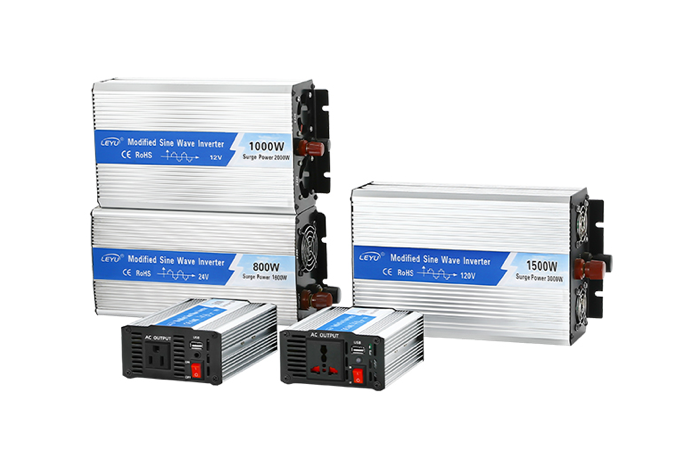
To understand why a Pure Sine Wave Inverter works, we need to look at how these appliances operate.
Refrigerators and air conditioners use induction compressor motors. These motors:
● Require smooth AC waveform
● Draw 3–7 times their rated power during startup
● Need stable voltage for consistent torque
For example, a refrigerator rated at 200W may require 800–1200W for a fraction of a second when the compressor starts.
If the inverter cannot deliver that surge instantly, the compressor may fail to start properly.
A Pure Sine Wave Inverter produces electricity almost identical to grid power. It delivers:
● Smooth sinusoidal waveform
● Stable frequency (50Hz or 60Hz)
● Minimal harmonic distortion
This matters because motors rely on waveform shape to rotate efficiently. Clean power allows them to:
● Start smoothly
● Operate quietly
● Maintain internal cooling cycles
Manufacturers like Leyu, known for strict quality control and advanced testing facilities, design inverters that maintain consistent waveform precision under load. This is especially important for compressor-based equipment.
Power Feature | Modified Wave | Pure Sine Wave |
Waveform Shape | Stepped | Smooth sinusoidal |
Compressor Noise | Noticeable | Minimal |
Startup Stability | Inconsistent | Stable |
Motor Efficiency | Reduced | Optimal |
Note: Always verify the inverter’s surge rating—not just continuous power. Surge handling determines whether compressors start successfully.
Sizing determines success. Undersized systems lead to instability. Oversized systems increase cost unnecessarily.
Below is a practical reference to help you estimate inverter sizing more accurately based on common household models:
Refrigerator Type | Running Watts | Startup Surge (Approx.) |
Mini Fridge | 50–100W | 150–300W |
Standard Kitchen Fridge | 100–300W | 600–1400W |
Large Side-by-Side | 300–800W | 1500–2000W |
Running watts reflect normal operation, while startup surge represents the short, high-power demand when the compressor activates. Most homes find a 1500W–2000W Pure Sine Wave Inverter sufficient for standard refrigerators, providing stable startup performance and reliable daily operation.
After identifying the startup surge:
1. Multiply surge wattage by 1.2 to 1.3
2. Select the next available inverter size
Example:
● Surge demand: 1200W
● Add 25% → 1500W minimum
This margin prevents overload trips and ensures long-term stability.
Reliable manufacturers such as Leyu integrate overload, short-circuit, and over-temperature protection. These features improve operational safety and system lifespan.
Tip: When designing systems for clients or installations, always calculate for worst-case startup, not average running power.
Air conditioners demand more planning. Their compressors are larger. Their startup current rises quickly.
AC Type | Running Watts | Startup Surge |
Small Window Unit | 800–1200W | 2500–3000W |
Medium Portable Unit | 1200–1800W | 3000–4000W |
Larger Residential Unit | 2000W+ | 4000W–5000W+ |
A 3000W Pure Sine Wave Inverter usually supports small to medium window units. Larger systems may require 4000W or higher. Surge rating must exceed compressor inrush current.
Higher wattage systems perform better on 24V or 48V battery banks. Lower current flows through cables. Heat decreases. Efficiency improves.
Leyu designs off-grid solar inverters for such scenarios. Their production facilities apply strict quality control standards. Global compliance allows installation in multiple regions without compatibility concerns.
Most systems power more than one device.
You may run:
● Refrigerator
● Air conditioner
● LED lighting
● TV or router
Add continuous running watts of all devices operating simultaneously. This helps you understand the base load your inverter must support during normal operation.
Example:
● Refrigerator: 200W
● AC: 1200W
● Lights: 100W
Total running load = 1500W
Next, check the highest startup surge—this usually comes from the air conditioner. Startup demand is brief but critical, and it determines whether the inverter can maintain stable output without tripping.
Your inverter must handle:
● The largest single surge
● The combined running wattage
If AC surge reaches 3000W, choose an inverter rated above that value, even if the total running load remains lower. Always include a safety margin to ensure smoother startup and long-term stability.
Careful planning prevents unexpected shutdowns, protects appliances, and improves overall system reliability in real-world installations.
Energy equals power multiplied by time.
If a refrigerator averages 150W and runs 10 hours daily:
150W × 10h = 1500Wh
If an air conditioner runs 5 hours at 1200W:
1200W × 5h = 6000Wh
Total daily requirement = 7500Wh
Battery capacity must exceed this amount after accounting for efficiency losses.
When designing an inverter system, voltage configuration plays a critical role in efficiency and safety. Selecting the correct system voltage helps reduce energy loss and ensures stable performance under heavy loads.
System Voltage | Best Use Case | Benefit |
12V | Small loads | Simple setup |
24V | Medium systems | Balanced efficiency |
48V | 3000W+ systems | Reduced current, improved efficiency |
Higher voltage reduces cable thickness requirements. It lowers heat. It enhances stability in larger installations.
Leyu offers OEM and ODM customization. They adapt inverter design according to voltage architecture and regional requirements. That flexibility supports professional energy projects worldwide.
Note: Systems above 3000W benefit significantly from 24V or 48V architecture.
When powering compressor-based appliances, waveform precision directly affects performance.
Feature | Result |
Smooth Waveform | Stable Operation |
Clean Output | Higher Efficiency |
Reduced Electrical Stress | Longer Lifespan |
Grid-Like Power | Seamless Compatibility |
Pure sine wave output closely replicates utility electricity. Appliances operate as if connected directly to the grid, maintaining stable frequency and voltage.
Smooth waveform allows motors to:
● Run cooler
● Consume power efficiently
● Maintain stable cooling cycles
Because the motor rotates evenly, it avoids unnecessary energy loss. Over time, efficient operation reduces overall power demand and helps optimize battery usage in off-grid systems.
Clean power reduces electrical stress on:
● Motor windings
● Capacitors
● Control boards
Lower stress means fewer performance fluctuations and reduced internal wear. This protects both the appliance and the inverter system, supporting dependable operation over the long term.
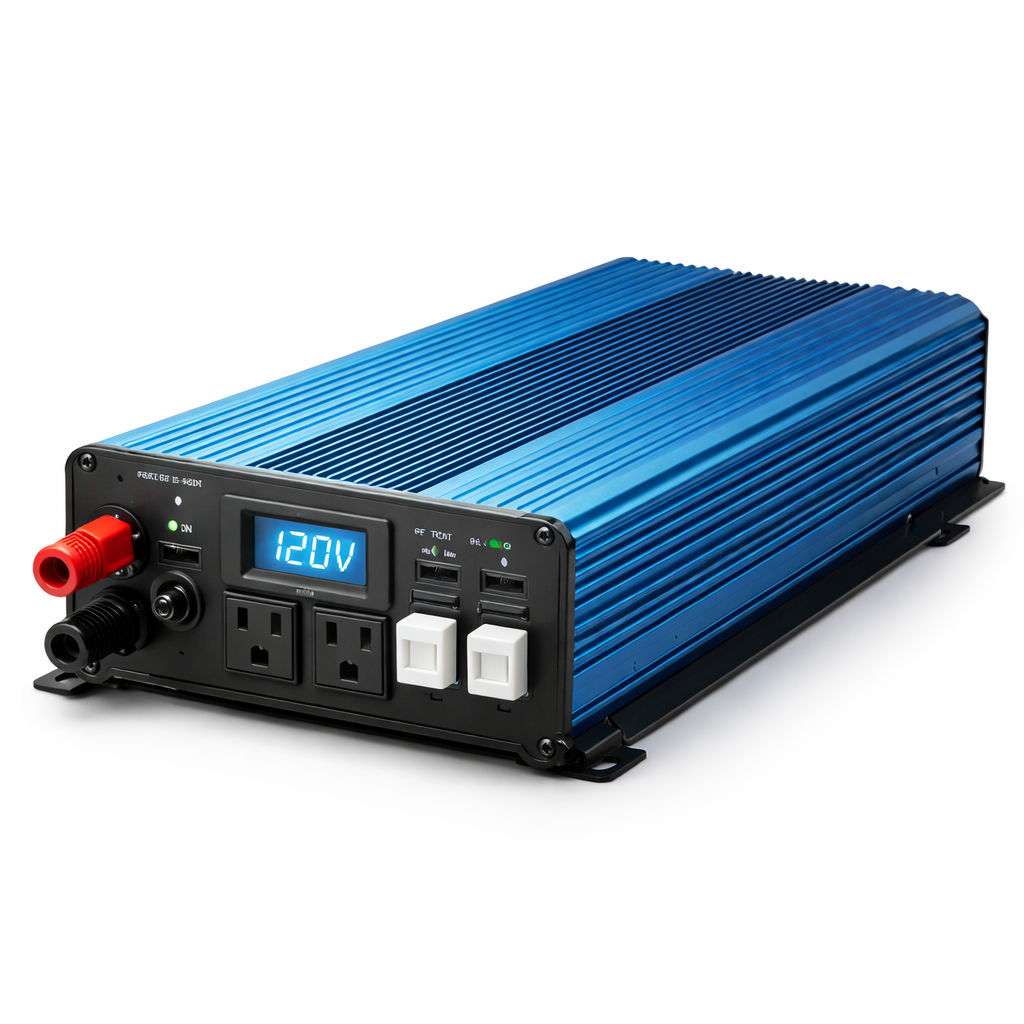
The table below provides a simplified sizing guide based on common household appliances and typical startup behavior. It helps you quickly match appliance type to an appropriate Pure Sine Wave Inverter capacity.
Appliance Type | Recommended Pure Sine Wave Inverter |
Mini Fridge | 1000W–1500W |
Standard Refrigerator | 1500W–2000W |
Window Air Conditioner | 3000W |
Larger AC Units | 3000W–5000W+ |
These recommendations assume average surge conditions and standard residential usage. Always add 20–30% headroom, verify startup surge rating, and confirm your battery system can support the total load.
A Pure Sine Wave Inverter can run a refrigerator or air conditioner when it is properly sized and supported by adequate battery capacity. Most refrigerators operate well on 1500W–2000W units, while air conditioners usually require 3000W or higher to handle startup surge.
Reliable performance depends on sufficient surge capacity, a safety margin, correct battery sizing, and proper system voltage configuration. Products from Zhejiang Leyu Electric Co., Ltd. deliver stable waveform output, strong protection features, and dependable compressor startup, helping users achieve grid-like cooling performance in solar and backup systems.
A: Yes, a properly sized Pure Sine Wave Inverter can run a refrigerator safely. It delivers smooth, grid-like power that supports compressor startup and stable cooling performance without voltage drops.
A: Most standard refrigerators require a 1500W–2000W Pure Sine Wave Inverter. The exact size depends on startup surge, which is often 3–7 times the running wattage.
A: Yes, but air conditioners need more capacity. A 3000W or higher Pure Sine Wave Inverter is usually recommended to handle high startup surge from the compressor.
A: A Pure Sine Wave Inverter produces a smooth waveform similar to utility power. This allows motors to run efficiently, start smoothly, and maintain stable operation over time.
A: Add the running watts of all devices operating together, then check the highest startup surge. Choose a Pure Sine Wave Inverter that exceeds that surge by 20–30% for reliable performance.
A: Yes. Even the best inverter cannot perform well without sufficient battery storage. Proper battery sizing ensures consistent voltage and longer runtime for refrigerators and air conditioners.
 English


