
Views: 0 Author: Site Editor Publish Time: 2026-03-03 Origin: Site
Electricity powers almost everything we use today, from laptops and medical devices to refrigerators and control systems. Yet not all electricity is equal. Poor waveform quality can reduce performance and shorten equipment life. That is why a Pure Sine Wave Inverter has become essential in modern power systems.
A Pure Sine Wave Inverter converts DC power from batteries or solar panels into clean AC power that mirrors the utility grid. This smooth output protects sensitive electronics and keeps appliances running efficiently. In this article, we will explain what a Pure Sine Wave Inverter is, how it works internally, and why it is widely used in solar, backup, and commercial applications.
A Pure Sine Wave Inverter is a device that converts DC electricity into smooth, stable AC power that replicates the waveform supplied by public utility grids.
When you plug devices into a wall outlet, they receive a continuous sine wave. A pure sine wave inverter recreates this same waveform, allowing connected equipment to operate as if it were powered directly by the grid.
A sine wave is a smooth, repetitive waveform that rises and falls evenly over time. It maintains:
● Consistent frequency (50Hz or 60Hz)
● Stable voltage levels
● Low harmonic distortion
Because the waveform is smooth, devices draw power evenly. Motors rotate smoothly. Electronics function without interference. Audio equipment runs quietly.
Below is a simple comparison to clarify the difference:
Feature | Pure Sine Wave Inverter | Stepped/Modified Output |
Waveform Shape | Smooth and continuous | Block-like or stepped |
Device Compatibility | Works with almost all AC devices | Limited compatibility |
Noise Level | Minimal electrical noise | Audible humming possible |
Efficiency | High conversion efficiency | Moderate efficiency |
When selecting equipment for distribution or integration, waveform precision directly affects customer satisfaction. Manufacturers such as Leyu, established in 2007 in Yueqing, focus on off-grid solar inverters and switching power supplies. Their long-term engineering background strengthens waveform consistency across product lines.
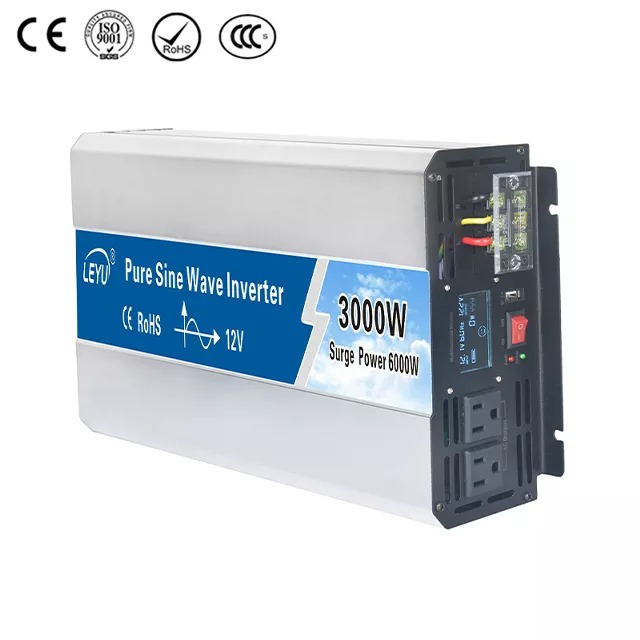
To understand how a Pure Sine Wave Inverter works, we need to break its process into clear stages. Internally, it uses advanced switching components, digital control, and filtering circuits to transform DC into high-quality AC.
The inverter receives DC power from:
● 12V battery systems
● 24V battery banks
● 48V industrial storage systems
● Solar-charged battery arrays
This DC power serves as the raw energy source. It cannot power most AC appliances directly, so it must be converted.
Inside the inverter, high-speed semiconductor switches (usually MOSFETs or IGBTs) rapidly turn the DC current on and off.
This process uses Sinusoidal Pulse Width Modulation (SPWM). The controller adjusts pulse widths in microseconds to digitally shape a waveform that approximates a sine curve.
The switching frequency often reaches tens of thousands of cycles per second. This high-speed modulation allows the inverter to create precise waveform control.
The modulated output still contains high-frequency components. To refine it, the signal passes through:
● Inductors
● Capacitors
● LC filters
These components remove noise and smooth the waveform. After filtering, the output closely resembles a true sine wave.
Next, the inverter adjusts voltage levels. It boosts or regulates output to standard AC levels:
● 120V (North America)
● 230V (Europe, Asia, Africa)
Some systems integrate high-frequency transformers for compact design. Others use low-frequency transformers for enhanced durability in heavy-duty environments.
The final result is clean AC electricity ready to power appliances, industrial tools, or telecom equipment.
Leading OEM manufacturers like Leyu integrate strict production control and advanced testing equipment to ensure waveform stability. Precision testing reduces distortion, improves reliability, and ensures consistent output across product batches.
Sudden voltage changes stress internal components. A pure sine wave avoids abrupt transitions. It provides stable energy flow.
This protects:
● Computers and servers
● CPAP machines
● Laboratory equipment
● Smart home systems
When appliances receive a smooth sine waveform, they perform more naturally and consistently. Motors rotate evenly instead of struggling under uneven current flow. This stable energy delivery directly affects operating temperature, energy consumption, and overall system performance. Over time, the difference becomes noticeable in both reliability and efficiency.
Performance Factor | Impact of a Pure Sine Wave Inverter |
Operating Temperature | Lower heat buildup due to smooth current flow |
Energy Loss | Reduced conversion and transmission losses |
System Efficiency | Improved overall energy utilization |
Motor Operation | Smooth rotation without vibration or noise |
Typical Efficiency Level | Often exceeds 90% in high-quality models |
Because of these advantages, many high-quality pure sine wave inverters reach efficiency levels above 90%, making them suitable for demanding residential and commercial applications.
Clean sine wave output minimizes humming in:
● Audio systems
● Studio equipment
● Communication devices
For commercial installations, this matters. Noise complaints often result from poor power quality.
Because it replicates grid electricity, a Pure Sine Wave Inverter supports diverse industries.
Solar panels produce DC. Homes and offices use AC. The inverter converts stored solar energy into usable electricity.
It enables:
● Rural electrification
● Off-grid cabins
● Remote monitoring stations
During outages, battery-backed inverters maintain operation of:
● Refrigerators
● Air conditioners
● Security systems
● Internet routers
Stable output prevents malfunction during sudden transitions.
Medical devices demand stable power. A waveform deviation may cause operational errors.
Applications include:
● Oxygen concentrators
● Imaging systems
● Clinical monitoring devices
Mobile environments experience vibration and voltage fluctuation. A pure sine wave inverter ensures reliable operation of:
● Onboard appliances
● Navigation systems
● Entertainment equipment
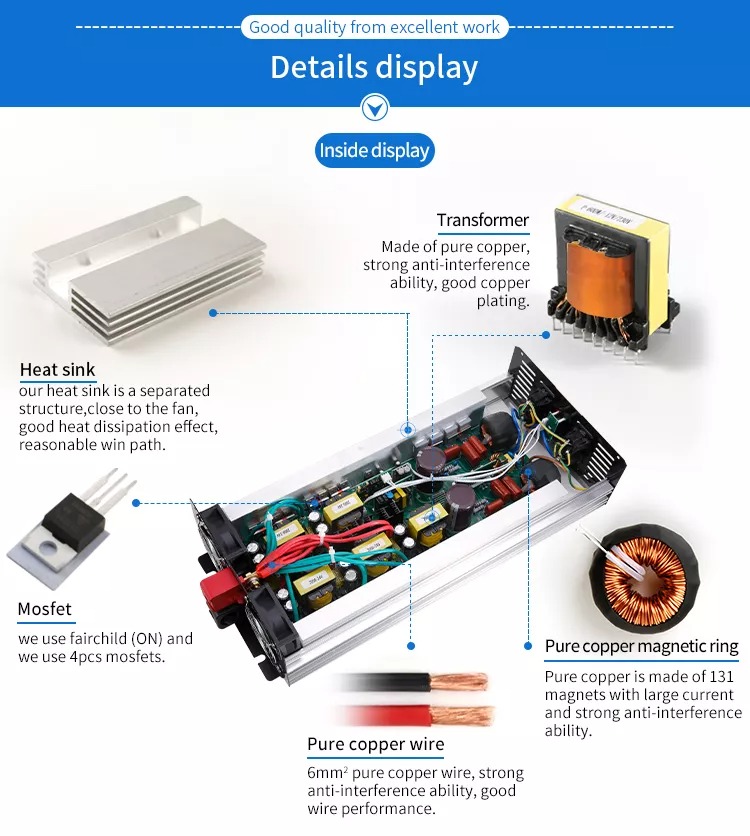
Internal design determines reliability.
Component | Function |
MOSFETs / IGBTs | High-speed DC switching |
DSP / Control Board | Regulates frequency and voltage |
Inductors & Capacitors | Filter waveform noise |
Transformer | Adjusts output voltage |
Each component influences performance. If switching devices degrade, efficiency drops. If filtering weakens, waveform distortion increases.
Manufacturers like Leyu, whose products comply with CE, FCC, ETL, ROHS, and ISO 9001 standards, implement strict quality control systems. Certification assures buyers that products meet international safety and compliance benchmarks.
Note: For international distribution, certification alignment with target markets reduces customs delays and improves procurement efficiency.
It supports nearly all AC appliances used in homes and businesses. The smooth sine waveform allows devices to operate as intended without performance issues or unexpected interruptions. It is especially suitable for equipment that relies on stable voltage and frequency control, including:
● Induction motors
● Refrigerators
● Microwave ovens
● Precision electronics
This broad compatibility makes it a reliable choice for mixed-load environments and professional installations.
Stable current flow reduces internal stress on circuits and mechanical parts. Devices run cooler during daily operation, which helps prevent overheating. Over time, components degrade more slowly, and maintenance frequency decreases. This improved stability supports longer service life and better long-term reliability for both residential and commercial systems.
A smooth waveform allows motors to operate without buzzing or vibration. Fans spin steadily instead of producing uneven noise. Audio equipment delivers clearer sound without background hum. This quiet performance improves user comfort and creates a more professional operating environment.
Choose an inverter compatible with your DC system voltage to ensure safe and stable operation. Selecting the correct voltage prevents unnecessary strain on batteries and improves overall system efficiency. Common configurations include:
● 12V for small systems
● 24V for mid-scale setups
● 48V for commercial installations
Higher voltage systems are often preferred for larger loads because they reduce current and improve transmission efficiency.
Before selecting a unit, calculate both running load and startup demand. Some appliances, especially those with motors or compressors, require higher surge power at startup.
Parameter | Why It Matters |
Continuous Power | Handles normal load operation |
Surge Power | Supports startup spikes from motors |
Efficiency | Reduces energy loss during conversion |
THD | Indicates waveform purity and stability |
Accurate sizing helps prevent overload and ensures long-term reliability.
Certifications signal product reliability and compliance with international regulations. Many global buyers require:
● CE
● FCC
● ETL
● ROHS
● ISO 9001
Working with strong OEM partners also ensures customization flexibility, stable production capacity, and consistent delivery schedules.
A Pure Sine Wave Inverter is more than a basic converter. It delivers grid-quality AC power from DC sources. Through advanced PWM control and filtering, it creates a smooth waveform that protects electronics and improves efficiency. It supports solar systems, medical devices, and mobile applications.
Zhejiang Leyu Electric Co., Ltd. provides certified pure sine wave inverter solutions built for reliability and OEM flexibility. Their products ensure stable performance and long-term value, helping integrators deliver safe and efficient power across global markets.
A: A Pure Sine Wave Inverter converts DC power from batteries or solar panels into smooth AC electricity that matches utility grid power. It delivers a clean, stable waveform that supports sensitive electronics and household appliances without performance issues.
A: A Pure Sine Wave Inverter uses high-speed PWM switching, filtering circuits, and voltage regulation to transform DC into a smooth sine wave. It shapes and refines the signal before delivering stable AC output to connected devices.
A: A Pure Sine Wave Inverter provides cleaner power, lower harmonic distortion, and better device compatibility. It reduces noise, improves efficiency, and helps extend the lifespan of motors and electronics.
A: A Pure Sine Wave Inverter is widely used in solar systems, residential backup setups, medical equipment, RVs, and industrial applications. It ensures reliable performance wherever stable AC power is required.
A: Yes, a Pure Sine Wave Inverter usually costs more than modified models because it uses advanced components and precise control systems. However, it offers better protection and long-term value.
A: To select the right Pure Sine Wave Inverter, calculate your total continuous load and account for surge power needs. Match the inverter voltage to your battery system and verify efficiency and certification standards.
 English


